
CBN (cannabinol) is a cannabinoid that forms as THC breaks down. THC produces a much stronger high than CBN, which is mildly psychoactive and has less clinical research.
For adults 21 and older, the practical differences involve impairment, scientific evidence, and product contents. Understanding the chemistry helps separate established facts from marketing claims.
Key Takeaways
- THC is cannabis’s main intoxicating compound; CBN is mildly psychoactive.
- Research hasn’t established a standard CBN dose for sleep or a reliable THC-equivalent dose.
- Cannabinoid amounts and batch testing matter more than promises about relaxation.
CBN vs THC: Chemistry and Brain Effects
These cannabinoids have related chemistry, but one is produced in the cannabis plant and the other forms through degradation; their effects aren’t interchangeable.
| Feature | CBN | THC |
|---|---|---|
| Full name | Cannabinol | Delta-9-tetrahydrocannabinol |
| Molecular formula | C21H26O2 | C21H30O2 |
| Main origin | THC degradation | Cannabis plant production |
| Intoxication | Much weaker; possible | Pronounced and dose-dependent |
| Receptor profile | Weaker CB1 binding; relatively greater selectivity for CB2 receptors | Partial agonist at CB1 receptors |
A high degree of chemical similarity between CBN and THC doesn’t establish equivalent effects.
How aging creates CBN
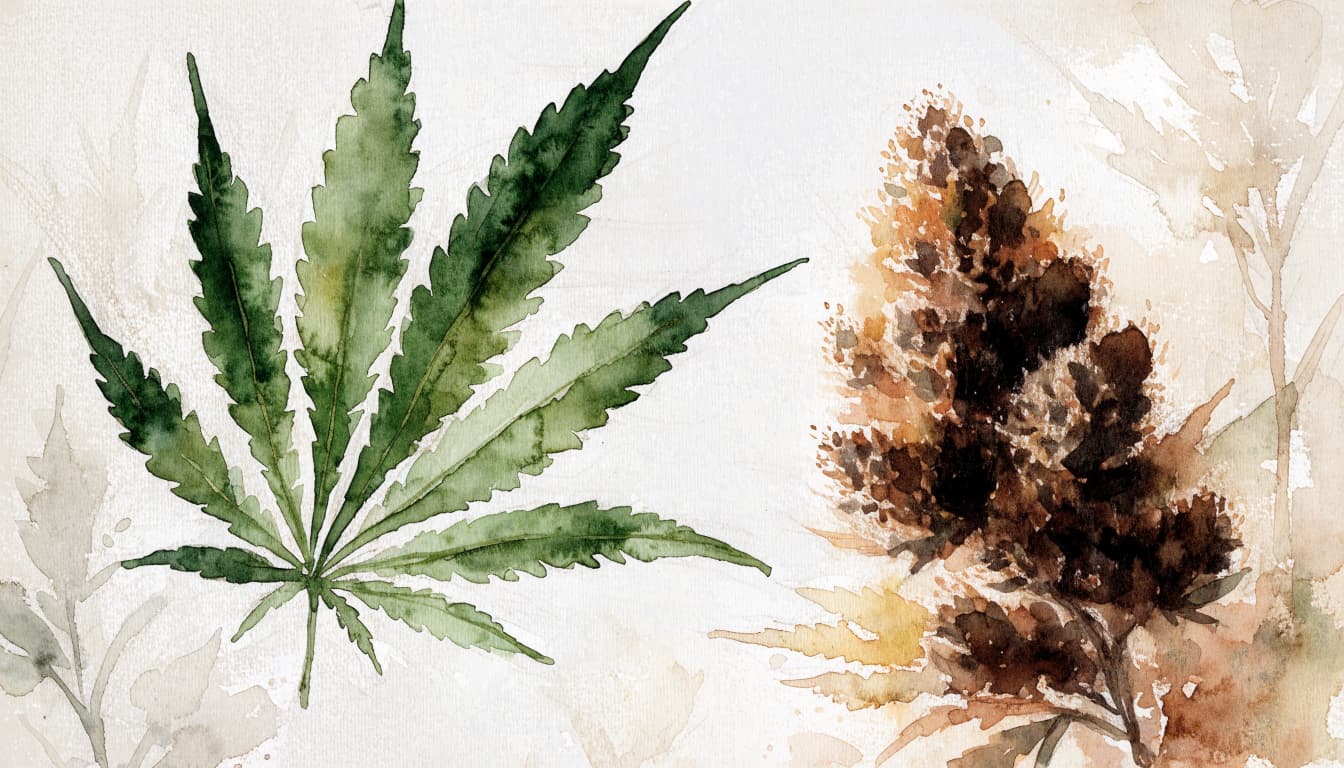
Exposure to oxygen, light, and heat promotes oxidation, which contributes to THC degradation and CBN formation. As a result, older or poorly stored recreational cannabis flower can contain less THC and more CBN.
However, aging doesn’t reliably produce a sleep product. Storage also changes other compounds, and a cannabinoid test is necessary to measure the resulting composition.
Why THC is more intoxicating
THC is a partial agonist at CB1 receptors in the brain’s endocannabinoid system, which influences perception and memory. A partial agonist activates a receptor without producing the maximum response associated with a full agonist.
Laboratory comparisons describe CBN’s CB1 binding as roughly five to ten times weaker, with relatively greater selectivity for CB2 receptors.
Historical estimates place CBN’s psychoactive potency around 10% to 25% of THC’s. Those estimates aren’t dosing conversions.
A review of cannabinoid pharmacology discusses activity beyond CB1 and CB2. THC also interacts with targets including GPR55, GPR18, PPARgamma, and TRPA1, but those interactions don’t predict an individual experience.
What the Evidence Says About Sleep and Other Uses
Sleep claims need stronger clinical evidence
CBN for sleep remains an emerging research area. Human evidence doesn’t establish that CBN consistently outperforms THC for falling asleep or staying asleep. A sedative label or claim doesn’t establish a clinical benefit, and no standard effective dose exists.
THC can cause drowsiness, but regular use can produce tolerance. Prescription dronabinol, a form of THC, is approved for chemotherapy-related nausea and appetite stimulation in AIDS-related anorexia, not insomnia. The FDA describes these distinctions in its cannabis-derived medicine guidance.
Laboratory findings don’t establish product benefits
Preclinical studies suggest CBN may slow gastrointestinal movement. Researchers have also documented antimicrobial activity of cannabinoids, including CBN activity against some antibiotic-resistant bacteria. These findings don’t establish treatments, pain relief, or benefits from retail products.
The entourage effect, proposed by Raphael Mechoulam and Shimon Ben-Shabat, describes possible interactions among cannabis compounds. Supporting clinical evidence remains limited. Likewise, terpenes explain aroma, but a terpene profile doesn’t guarantee sleep or relaxation.
Reading Labels and Reducing Risk
For cannabis edibles, including THC gummies, compare milligrams of each cannabinoid per serving, not only the package total. A CBN-heavy ratio doesn’t cancel the THC present. Cannabinoid amounts and label claims alone don’t establish pain relief.
For flower, cannabis vapes, and concentrates such as live resin, percentages describe concentration rather than a reliable dose per inhalation. Consider a product’s CBD content alongside its actual THC content. A full-spectrum label doesn’t guarantee a particular experience, and neither a label nor the entourage effect establishes a specific outcome.
The New York cannabis label guide explains serving information and access to a Certificate of Analysis. The report’s batch identifier should match the package. Storage can affect composition through oxidation, so batch testing is needed to confirm the contents. On a lab report, 1 mg/g equals 0.1%; “ND” means not detected at the laboratory’s detection limit, not necessarily absolute zero.
New York’s licensed market requires testing and regulated labeling, although testing doesn’t make cannabis risk-free.
Both cannabinoids warrant caution with alcohol, sedatives, and other medications. A pharmacist can assess interactions. Cannabis should be avoided during pregnancy and breastfeeding, and anyone experiencing impairment or a THC-related high shouldn’t drive. Edibles can take hours to reach their full effects.
Are CBN and THC Legal in New York?
New York permits regulated adult-use cannabis sales to adults 21 and older. However, legality depends on a product’s source and regulatory category: hemp-derived products and licensed dispensary products follow different rules.
The 2018 Farm Bill excluded qualifying hemp with no more than 0.3% THC, measured as delta-9 THC by dry weight, from federal controlled-substance rules. However, federal hemp-definition changes take effect November 12, 2026, adding restrictions that make the old threshold alone insufficient.
Hemp products also remain subject to the Federal Food, Drug, and Cosmetic Act and state requirements. New York’s cannabinoid hemp regulations include CBD:THC ratio restrictions; CBN doesn’t create a blanket exemption.
A product labeled “CBN” can still contain THC. Likewise, delta-8 and delta-9 products don’t become interchangeable legally because both carry a hemp label.
Frequently Asked Questions
Is CBN good for anxiety?
Clinical evidence doesn’t establish CBN as an anxiety treatment. THC can increase anxiety or paranoia, particularly at higher doses. Neither a “calming” product name nor added CBD guarantees protection against those effects.
Does the liver or the kidneys process THC?
The liver handles most THC metabolism, producing active 11-hydroxy-THC before further breakdown. CBN also undergoes liver metabolism. The kidneys help eliminate metabolites, but they aren’t the main site of THC processing.
Compare the Contents Before Choosing
CBN is less intoxicating than THC, but weaker effects don’t establish better sleep or greater safety. Serving amounts and batch information provide a firmer basis for comparison than product names or effect promises.
Adults 21 and older exploring options through Upstate Canna Co., a licensed dispensary in Schenectady, can use the online menu and delivery options alongside package information to compare cannabinoid contents.