
Cannabis can lose its aroma before it looks noticeably different. Good cannabis storage protects freshness while keeping products away from children, pets, and anyone under 21.
For adults, the practical starting point is secure, cool, dark storage with controlled humidity and minimal air exposure. Proper storage begins with the packaging, then the environment around it. Knowing how to store cannabis properly protects both its potency and the people in your home./p>
Key Takeaways
- Keep cannabis locked away from children and pets, and retain its original child-resistant packaging and labels.
- Store properly dried flower in an airtight glass container in a cool, dark place. Stable humidity near 62% helps protect freshness, while excess moisture can raise mold risk.
- Follow product-specific instructions for edibles, concentrates, and vapes. Humidity packs are for suitable dried flower, not every cannabis product.
- Refrigeration and freezing aren’t ideal for everyday flower storage. Discard flower with visible mold, and stop using it if it smells musty or ammonia-like.
1. Keep cannabis locked up and labeled
Cannabis belongs in a locked cabinet or storage box, out of sight and reach of children and pets. New York’s Office of Cannabis Management recommends locked, secure cannabis storage, including for products that resemble ordinary food.
Original child-resistant packaging should stay with the product. Child-resistant doesn’t mean childproof, so packaging alone isn’t enough.
Labels preserve expiration dates, storage instructions, and batch information. When flower is transferred into another container, its original package should remain alongside it. The guide to New York cannabis labels explains those details and how batch identifiers connect products with laboratory reports.
2. Control the four conditions that affect freshness
Keep temperature steady and light low
A home storage target of 60-70°F suits properly dried recreational cannabis flower. Hot cars, sunny windowsills, and cabinets beside ovens are poor choices. Heat accelerates the degradation of cannabinoids, while warm, damp conditions encourage mold.
Light, especially UV light, also damages stored flower, so limit light exposure. Amber glass reduces light exposure compared with clear glass, but a dark cabinet provides additional protection.
Terpenes are the aromatic compounds behind flower’s scent. Aroma can fade within days of repeated exposure to air and light. Cannabis preservation guidance describes how environmental conditions affect stored cannabis.
Balance humidity and limit oxygen
A 62% humidity pack falls within both commonly recommended ranges, 55-62% and 59-63% relative humidity. Below about 55%, flower dries out and trichomes, its resin-bearing structures, become brittle. Above 65%, mold risk rises.
Two-way humidity packs, including Boveda packs, help maintain stable conditions. Pack weight and humidity percentage are different measurements: “62%” doesn’t mean “62 grams.”
Oxygen contributes to THC oxidation into CBN. Airtight containers reduce exposure, but they belong with properly dried, cured flower. Sealing damp cannabis traps moisture; humidity packs can’t make wet or moldy flower safe.
3. Choose containers for the quantity and product
Airtight glass is the practical first choice
Airtight glass storage containers, such as a mason jar, are a reusable option for flower. Dark or amber glass is preferable; clear glass needs a consistently dark storage location.
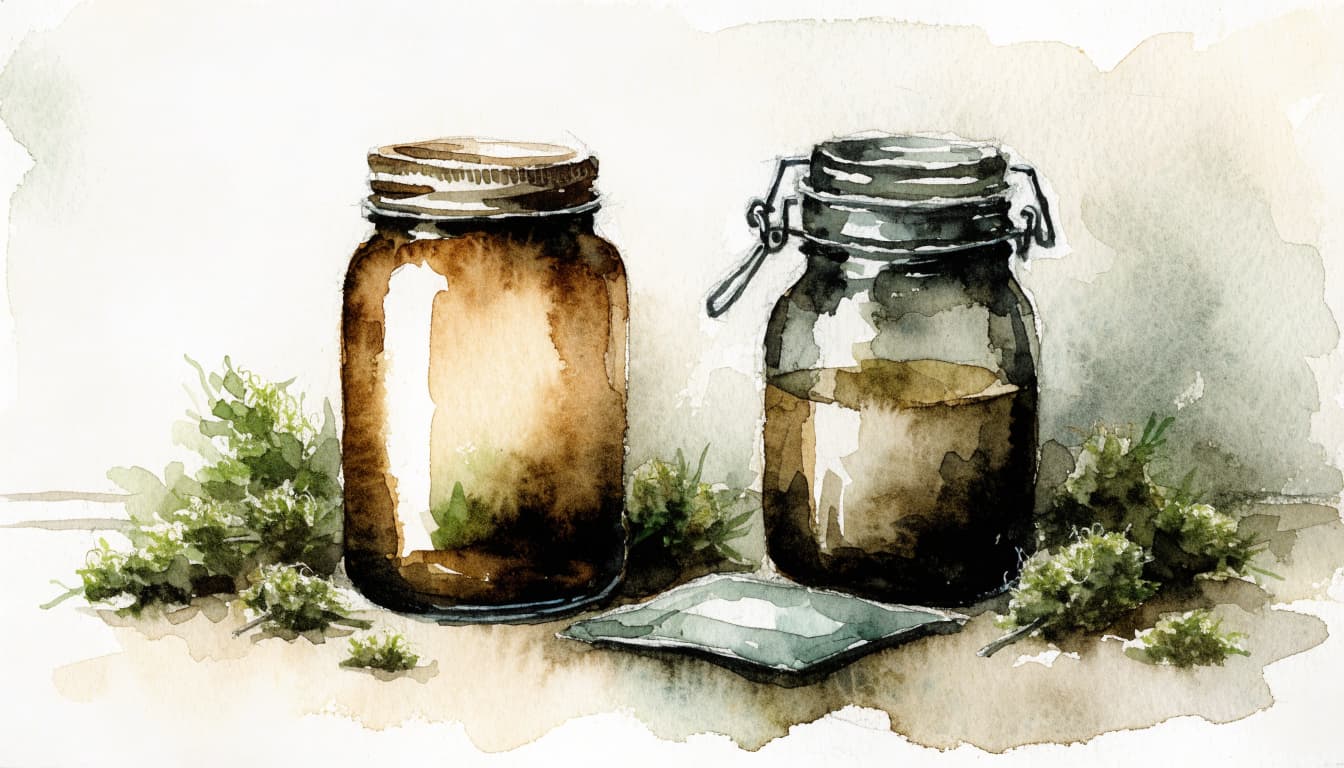
Choose a mason jar size that leaves room without excessive empty space.
| Flower quantity | Starting container size |
|---|---|
| 3.5 grams | Small 2-4-ounce jar |
| 7-14 grams | 4-8-ounce jar |
| 28 grams | Pint jar |
Bud density varies, so flower should fit loosely without compression. Oversized jars hold unnecessary air, while plastic baggies offer weak protection against crushing and air exchange.
An 8-gram Boveda pack is commonly used for up to an ounce of flower, often in a pint jar. Pack sizing follows product quantity and manufacturer specifications, not jar volume alone.
Other product formats need different handling
Cannabis edibles and THC gummies should remain sealed in their original packaging, separate from ordinary snacks. Food ingredients and package instructions determine whether refrigeration is appropriate.
Cannabis concentrates, including live resin, may require colder storage than flower. Their labels take priority over general flower advice. Cannabis vapes should stay upright, away from heat. CBD products also need storage suited to their formulation.
Grove Bags and Cannatrol offer different curing or storage options; Boveda controls humidity. Grove Bags, Cannatrol, and Boveda aren’t interchangeable systems. Some curing methods involve jar “burping,” but finished retail flower doesn’t need routine “burping.”
4. Match the storage method to the timeline
After curing is complete, properly stored flower can retain much of its potency for 6-12 months, although aroma and texture may change sooner. Oxidation can affect THC and CBN levels, but a universal first-year loss of 10-20% isn’t reliable across products and conditions.
For regular home use, a cool cabinet is generally preferable to refrigeration for flower. Temperature changes can cause condensation and increase mold risk. After refrigeration, the closed container should reach room temperature before opening.
Freezing makes trichomes brittle and vulnerable to breaking off during handling. It’s generally reserved for extraction workflows rather than everyday storage.
Vacuum sealing can reduce air exposure beyond six months, but suction may crush flower; low suction and rigid protection reduce compression. Grove Bags are another option, but instructions vary by product; Boveda humidity packs may help manage moisture without guaranteeing freshness. Pre-freezing can make flower brittle, so ordinary airtight jars, including a mason jar, remain the simpler home option.
5. Recognize mold and declining quality
Visible mold means the affected stored batch should be discarded. Scraping away a fuzzy patch doesn’t establish that the remaining flower is safe.
Warning signs deserve different responses:
- White, gray, or black fuzzy growth indicates possible mold and means the flower shouldn’t be consumed.
- A musty or ammonia-like smell is a reason to stop using the product.
- Brown or yellow discoloration and crumbling dryness suggest deterioration, but don’t establish mold by themselves.
A humidity pack may improve dryness, but it cannot remove mold or restore lost cannabinoids and terpenes.
Cannabis storage FAQs
Is two-year-old cannabis safe to smoke?
Age alone doesn’t establish safety. Two-year-old flower may have lost substantial aroma and potency, even without obvious mold. Normal appearance also doesn’t guarantee freedom from contamination. Products showing mold or suspicious odors should be discarded, regardless of age.
Should humidity packs go into every cannabis product?
No. Humidity packs are intended for suitable dried flower storage, not gummies, vape cartridges, or concentrates. Adding one to another product format can create unsuitable conditions. Product-specific package instructions remain the better guide.
How long does cannabis stay fresh?
Properly stored flower can retain much of its potency for 6-12 months after curing is complete, although aroma and texture may change sooner. A cool cabinet is generally preferable to refrigeration for regular home use, as temperature changes can cause condensation and increase mold risk.
Make safe storage part of the purchase
A modest airtight container, stable humidity, a cool, dark setting, and a locked location cover most home cannabis storage needs. Original labels remain important for every product format.
Adults 21 and older in Schenectady and the Capital Region can review ordering, pickup, and delivery information when planning a purchase. Choosing an amount that fits the available secure storage space helps keep the setup manageable.